Introduction: Dialing in the Right Straightener Temperature—No Guesswork
You came here wondering what temperature should I set my hair straightener—and you’re about to leave with a confident, personalized number. No more guesswork, no more singed ends, and no more frizz that creeps back fifteen minutes after styling. With the right heat setting, smart technique, and a few pro tweaks, you’ll smooth faster, shine brighter, and protect your hair’s health for the long haul.
In this guide, you’ll get a concise temperature cheat sheet by hair type, the science behind heat styling, tool-specific adjustments (titanium vs ceramic), and climate-proof strategies. You’ll also learn unmistakable warning signs your iron is too hot—and how to fix it fast. Bookmark this and make your flat iron routine both safer and more effective.
Ready to nail your perfect setting with confidence? Let’s dial it in.
Quick Summary: Temperature Cheat Sheet by Hair Type
Set a starting point, then adjust in 10–20°F (5–10°C) steps based on results.
- Very fine, fragile, or damaged hair: 250–300°F (120–150°C)
- Fine to medium hair: 300–330°F (150–165°C)
- Medium hair (healthy): 330–365°F (165–185°C)
- Coarse, dense, or resistant hair: 365–410°F (185–210°C)
- Tight/coily textures (healthy): 350–400°F (175–205°C) with meticulous technique
- Color-treated or bleached: 250–320°F (120–160°C)
- Extensions (human hair): 250–290°F (120–145°C), always test a small strand
Pro tips: Always use a heat protectant, work on fully dry hair (unless using a steam styler), aim for 1–2 passes with steady tension, and choose the lowest temperature that achieves smoothness.
The Science of Heat Styling: What Happens to Water and Keratin
Understanding what heat actually does will help you choose a safer setting. Hair contains water and keratin-based structures. When you apply heat, hydrogen bonds in the hair temporarily realign as water around them evaporates. This lets you reshape strands straight or wavy—until moisture re-enters and bonds reset.
Why too much heat hurts: Excessive temperatures or prolonged exposure can over-dry the cortex, rough up the cuticle, and even cause ‘bubble hair’—steam pockets formed when internal moisture superheats. Over time, this means brittleness, breakage, and dullness. While keratin is tough, proteins can denature with high heat and time; moderation and protection matter.
To go deeper on fundamentals, see the science of hair straightening and the structure of keratin. For healthy habits that limit damage, the American Academy of Dermatology’s advice on heat styling is a helpful reference.
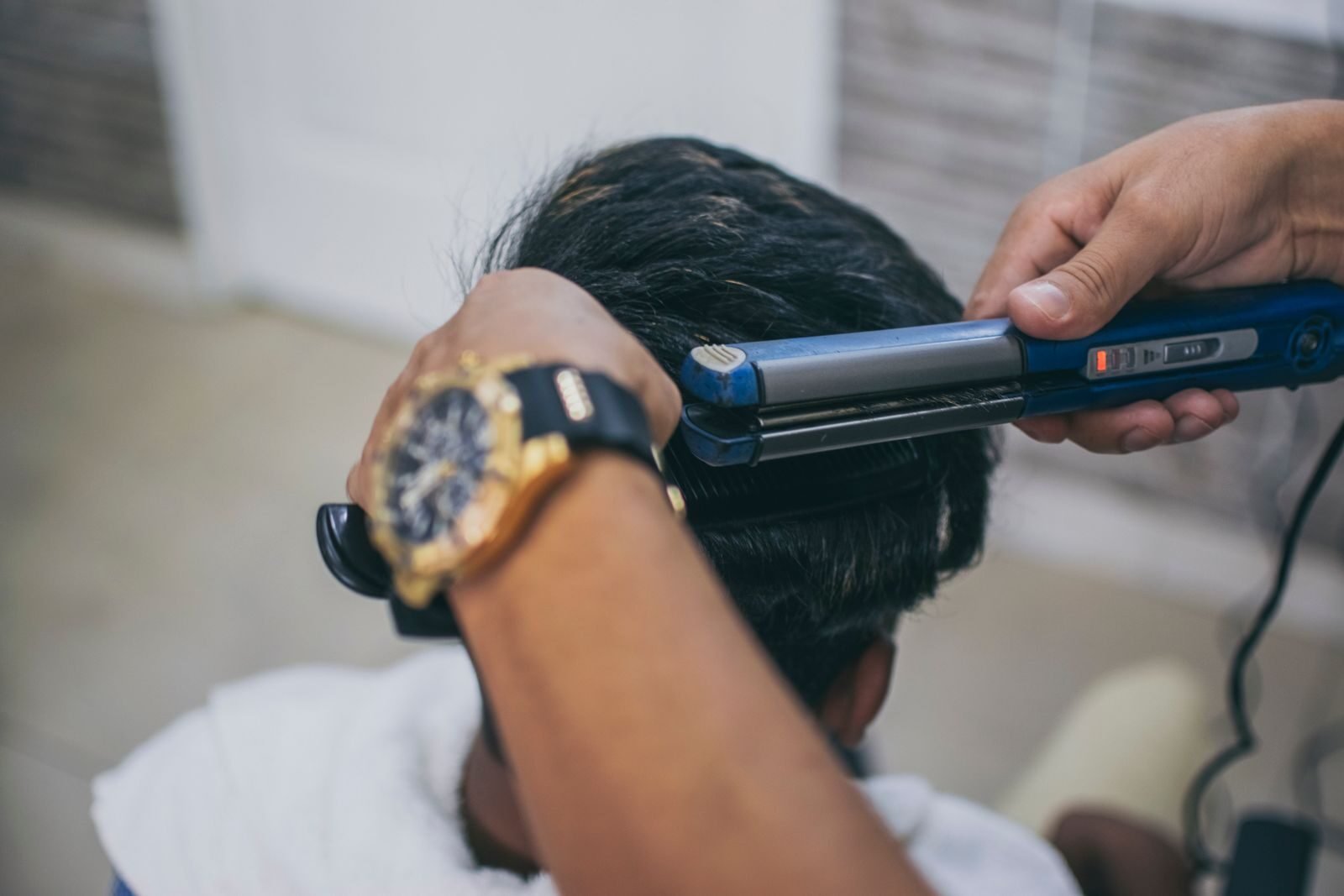
Recommended Temperatures by Hair Type & Condition (Fine, Medium, Coarse, Coily, Damaged, Color-Treated, Extensions)
Use these ranges as a smart starting point, then fine-tune based on your tool’s performance, your technique, and how your hair responds.
- Fine or fragile hair: Start 260–290°F (127–145°C). If hair won’t smooth in two slow passes, inch up to 300°F (150°C). Keep sections small, use a comb-chase method, and avoid pressing too hard.
- Medium hair (healthy): Start 320–350°F (160–177°C). Many find 340–365°F (171–185°C) is the sweet spot for smoothness without overexposure.
- Coarse, dense, or resistant hair: Start 365°F (185°C). If needed, increase to 390–410°F (199–210°C) for tight cuticles. Prioritize fewer, slower passes over cranking heat higher than necessary.
- Coily and natural textures: Start 350–375°F (175–190°C). Only step to 390–400°F (199–205°C) if hair is healthy, fully dry, well-stretched, and protected. Use tension and tiny sections.
- Damaged or overprocessed hair: Cap at 250–300°F (120–150°C). Focus on condition first: protein-moisture balance, trims, and gentle passes. Styling perfection is less important than preservation.
- Color-treated or bleached: Aim 250–320°F (120–160°C). Pigment and lightened hair are more porous; minimize passes and lock in shine with a cool finish and anti-frizz serum.
- Human-hair extensions: 250–290°F (120–145°C). Always test a hidden strand. Keep plates away from bonds or tapes and support the extension while passing the iron.
Important: The right temperature makes hair smooth in 1–2 deliberate passes. If you need three or more, adjust your technique or tool before you escalate heat.
Adjust for Your Tool: Titanium vs Ceramic, Plate Size, and Heat Stability
Your iron’s material and design impact how a given temperature feels on the hair.
- Titanium plates: Excellent heat conduction and fast recovery. They feel ‘hotter’ on contact and power through coarse, resistant hair. If switching from ceramic to titanium, consider starting 10–20°F (5–10°C) lower.
- Ceramic or tourmaline-ceramic: More even heat and gentle glide. Great for fine to medium hair, and for reducing hotspots. You may need slightly higher settings vs titanium on very coarse textures.
- Plate size: Narrow (0.5–1 in) = precision, short hair, edges, and curls. Standard (1 in) = versatile for most. Wider (1.25–2 in) = long, dense hair and fewer passes. Wider plates distribute heat over more hair, so you can often lower the temp a touch.
- Heat stability: Irons with strong temperature control maintain consistent heat from root to tip. Unstable tools run cooler mid-pass, making you repeat strokes. Upgrading to a stable tool frequently reduces the temperature you need.
If you style on the go, a compact, cordless option can be a smart travel companion. Explore this USB wireless charging hair straightener comb for quick touch-ups and sleek edges without hunting for an outlet.
Technique Matters: Dryness Level, Pass Count, Tension, and Pace
The right temperature only works if technique is on point. These fundamentals let you style smoother at lower heat.
- Dryness is non-negotiable: Straighten on 100% dry hair unless you’re using a steam styler designed for damp hair. Residual moisture can sizzle and cause internal damage.
- Comb-chase for glassy results: Run a fine-tooth comb ahead of the iron to pre-align strands. This reduces snags and lets you drop heat while improving shine.
- Pass count: Target 1–2 slow passes. If you need more, either lower your section size, improve tension, or adjust temperature slightly.
- Tension & pace: Firm, even tension; slow, steady movement (about 1 inch per second). Rushing creates uneven spots that make you go back—and that ups total heat exposure.
- Section size: Thin, consistent sections straighten faster and smoother. If your sections are too thick, you’ll crank heat unnecessarily.
- Angle & finishing: Keep the iron parallel for roots and bevel gently at the ends to seal the cuticle. Finish with a cool blast or a light serum for polish.
Climate & Product Factors: Humidity, Leave-Ins, and Heat Protectants
Weather and product choices can sabotage or supercharge your results. Calibrate both to protect your finish—without cranking heat.
- Humidity strategy: In high humidity, lean on anti-humectants (silicones, lightweight oils) as a topcoat to block moisture re-entry. In dry climates, humectants (like glycerin) can help flexibility—just don’t overdo them before heat.
- Heat protectants: Look for ingredients that create thermal barriers and improve slip (silicones, quaterniums, polyquats, and specialized polymers). They won’t make hair damage-proof, but they significantly reduce cuticle wear and color fade.
- Leave-ins & oils: Apply lightly and evenly. Saturated hair can smoke or sizzle—even at lower temps—because product is cooking on the surface. Less is more before you press.
- Setting sprays and finishers: A light, flexible hold spray post-styling helps lock out frizz. Serums or creams seal the cuticle for shine without re-wetting the hair.
For general, dermatologist-approved heat safety guidance, see the AAD’s heat styling tips. Understanding moisture’s role in frizz also pairs well with the basics of straightening.
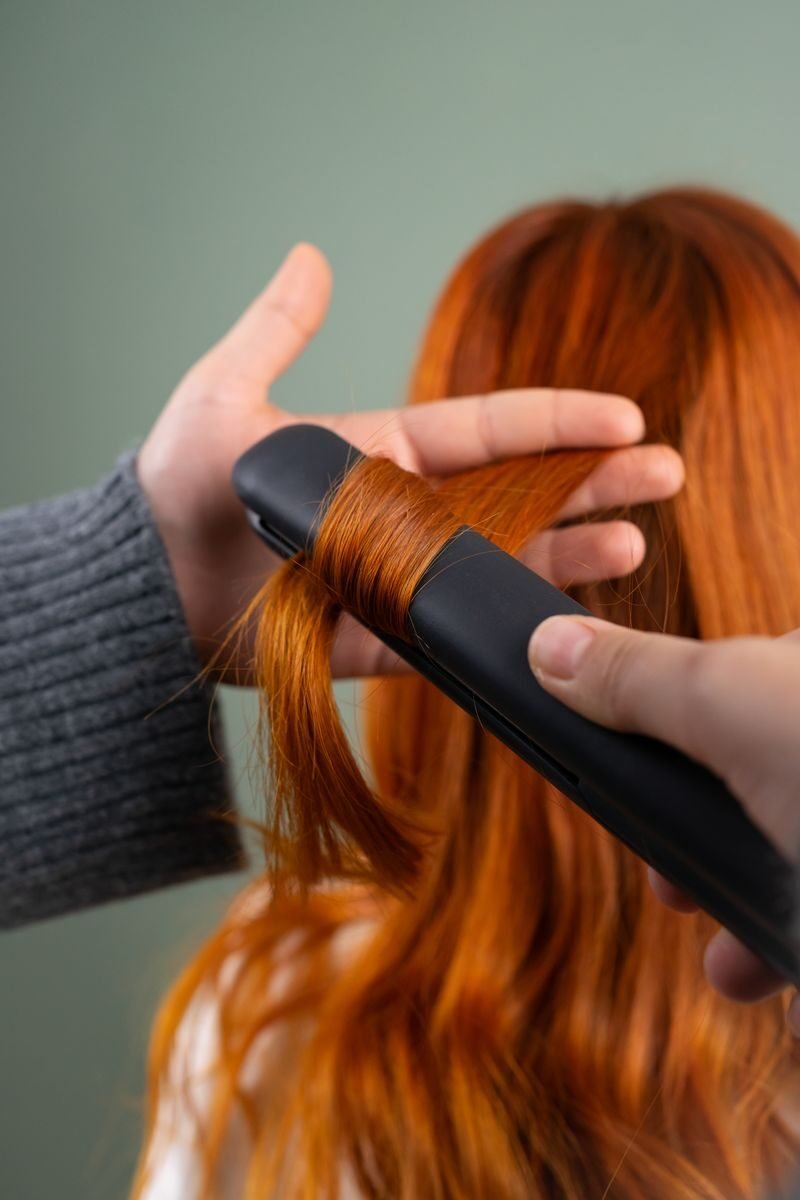
Warning Signs You’re Too Hot—and How to Fix It Fast
Watch for these red flags, then course-correct immediately to protect your length and color.
- Sizzle or smoke (not just a light mist from protectant): Lower heat 20–30°F (10–15°C), ensure hair is fully dry, and wipe excess product off plates.
- Burnt smell or darkening: Pause, clarify product buildup at your next wash, and stay under 365°F (185°C) until hair rebounds.
- Texture feels crispy or rough after one pass: Drop temperature and slow your pace. Add a heat protectant with more slip.
- White dots at ends or sudden breakage: Those can signal heat-compromised tips. Trim as needed and cap temps at the low end of your range.
- Style sets too quickly with visible plate lines: You’re pressing too hot or too hard. Reduce heat, use a comb-chase, and ease tension.
Reset plan: Deep condition, re-balance protein and moisture, then reintroduce heat gently. Consider a more heat-stable tool or a lightweight straightener comb for lower-heat smoothing on the go.
Conclusion: Set It Smart, Style It Safe
You now have a clear, science-aware answer to the question: what temperature should I set my hair straightener? Start with the cheat sheet, respect your hair’s condition, and let technique—not just higher heat—do the heavy lifting. With consistent sections, steady tension, and the right protectants, you’ll get silky results with fewer passes and far less risk.
Stay curious and keep fine-tuning. Note your setting, the weather, and how long your results last. In a few sessions, you’ll lock in a personalized routine that’s fast, shiny, and safe. And if you need a compact companion for touch-ups, check out the USB wireless charging hair straightener comb—a handy way to stay sleek anywhere.
Set it smart. Style it safe. Shine on.
FAQs: Is 450°F ever necessary? Can low heat still smooth? What temp for keratin treatments? Steam vs dry straightening? Can I curl with a straightener at the same temp?
Is 450°F (232°C) ever necessary?
Rarely for at-home use. 450°F may be used by pros on very resistant, healthy hair or to seal certain salon keratin treatments following strict protocols. For day-to-day styling, most people can achieve sleek results at 300–410°F (150–210°C). If you must go higher, keep passes minimal and protect aggressively.
Can low heat still smooth my hair?
Yes—if your technique is dialed in. Use smaller sections, a comb-chase method, strong tension, and a slow pass. Many fine-to-medium hair types get glossy results at 300–350°F (150–177°C) when technique is solid and the tool has stable heat.
What temperature should I use for keratin treatments?
Follow the manufacturer’s instructions. Many professional smoothing or keratin services call for 410–450°F (210–232°C) with a precise number of passes and tiny sections. Outside of a pro service, daily styling should be significantly cooler to minimize cumulative damage.
Steam vs dry straightening—what’s better?
Steam straighteners add controlled moisture to help reshape bonds at slightly lower plate temperatures and can be gentler when used correctly. Traditional dry irons are versatile and fast. If your hair is prone to dryness, steam can help; if it’s very porous in humidity, a dry iron plus anti-humectant finish may last longer.
Can I curl with a straightener at the same temperature I use to straighten?
Often you can go slightly lower for curls because the hair dwells on the plates a bit longer as you twist. Try 10–20°F (5–10°C) less than your straightening temp and keep the motion smooth. Use a heat glove and avoid pausing in one spot to prevent hot spots.
What if my iron shows Celsius and I only know Fahrenheit?
Quick reference: 300°F ≈ 150°C, 330°F ≈ 165°C, 365°F ≈ 185°C, 400°F ≈ 205°C, 430°F ≈ 221°C. Choose the nearest setting below your target and adjust by feel.
Does plate size change the right temperature?
It can. Wider plates cover more hair per pass, so you may be able to lower your temperature a bit. Narrow plates excel at edges and shorter hair without needing more heat.
How do I know if my tool runs hot?
If a new iron suddenly makes old settings feel too intense—smell, smoke, or over-flattening—assume it runs hotter or recovers heat faster. Start 20°F (10°C) lower than usual and re-test.
For more fundamentals, revisit the science of hair straightening and keratin. Knowledge is power—and healthier hair.